Economy and finance
National accounts, prices and public finances: the core macroeconomic aggregates of the European economy.
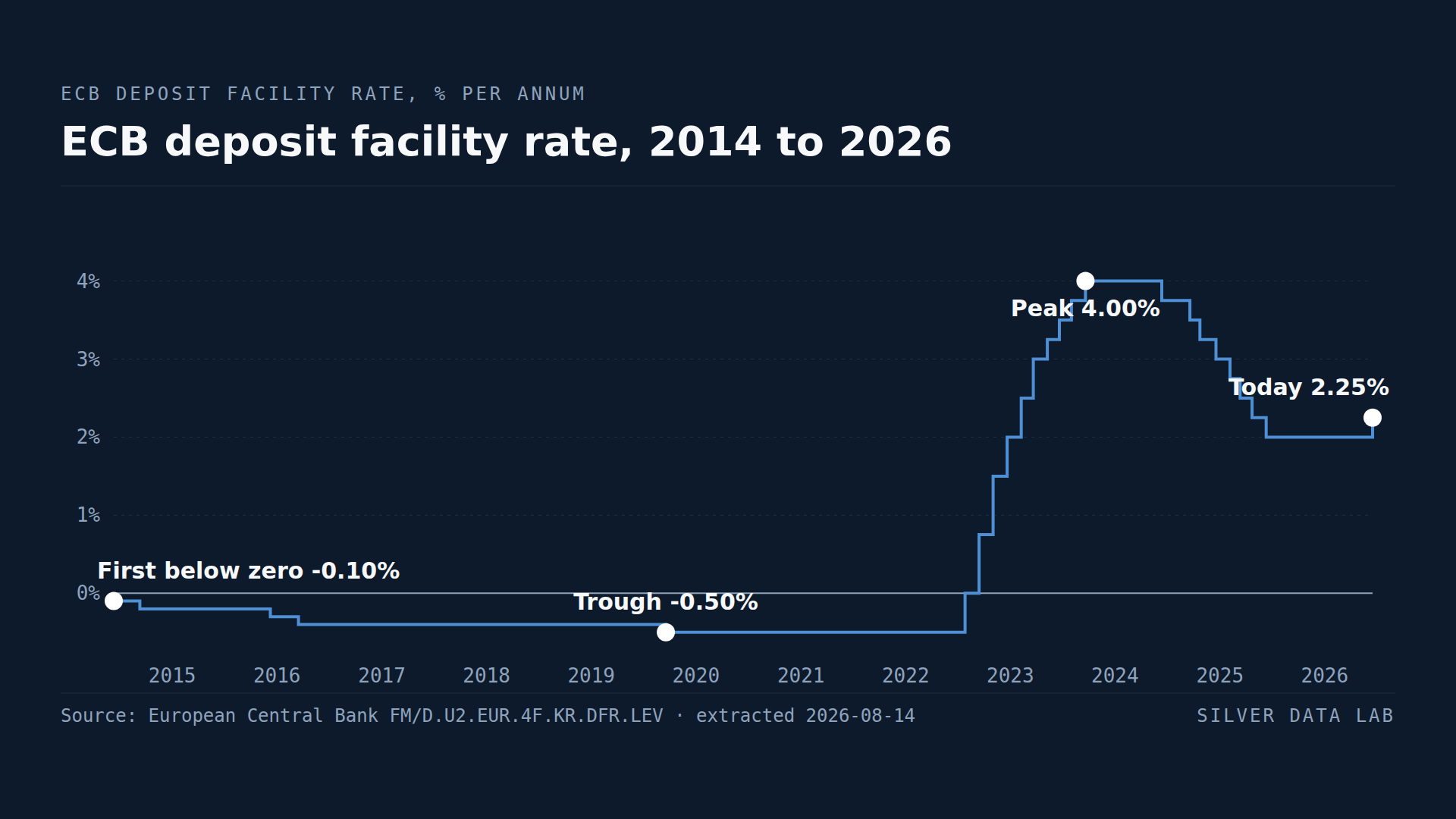
After Eight Years of Negative Rates, the ECB Raised Them Faster Than Ever
The deposit facility rate stood at -0.50% from September 2019 until July 2022, the end of eight years below zero that began in June 2014 — and of a decade at or below it, the rate having first reached zero in July 2012.
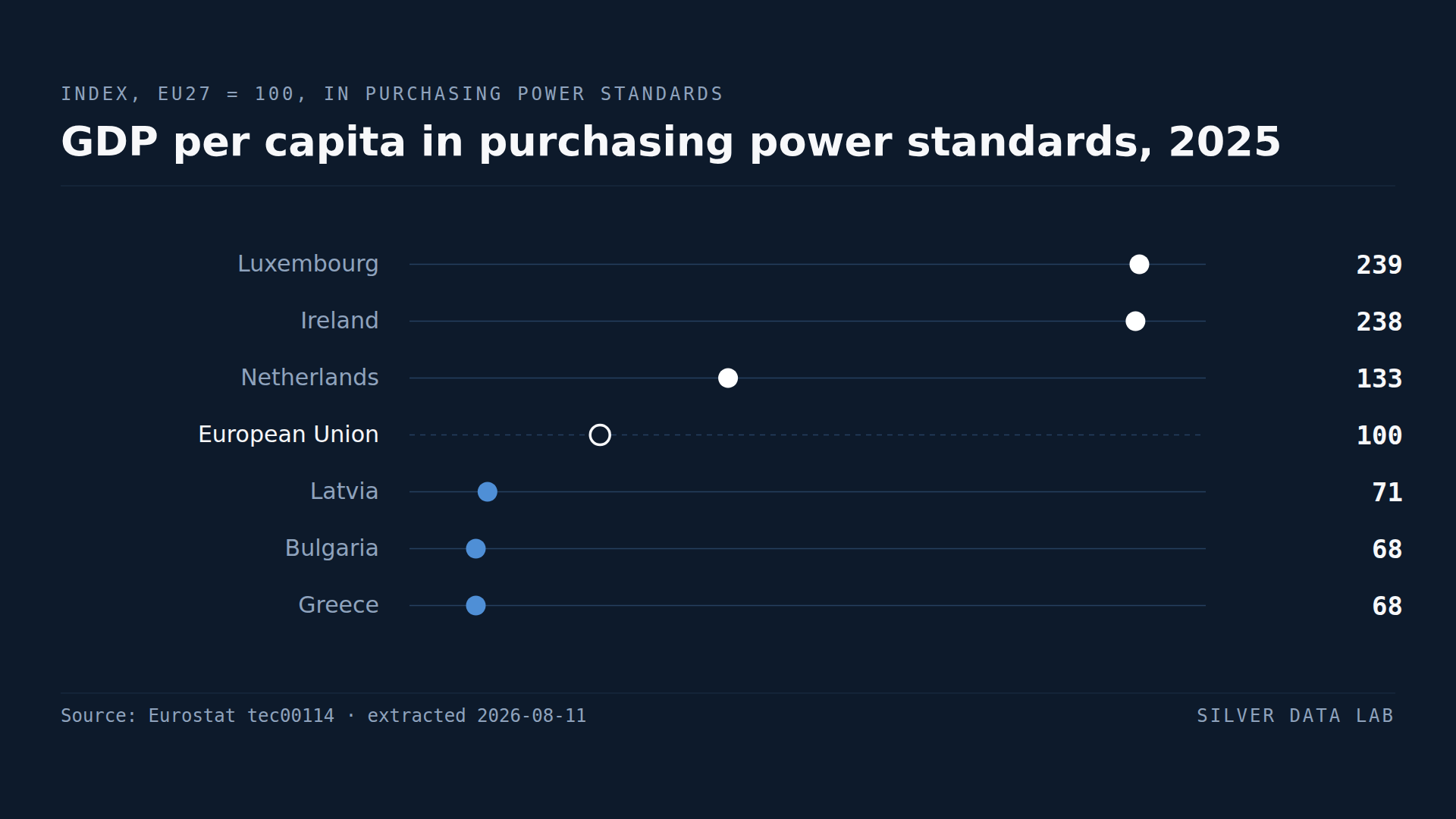
GDP per Head Makes Luxembourg and Ireland Look Richer Than They Are
Luxembourg records 239 and Ireland 238 against an EU average of 100 — more than double the Union's output per head.
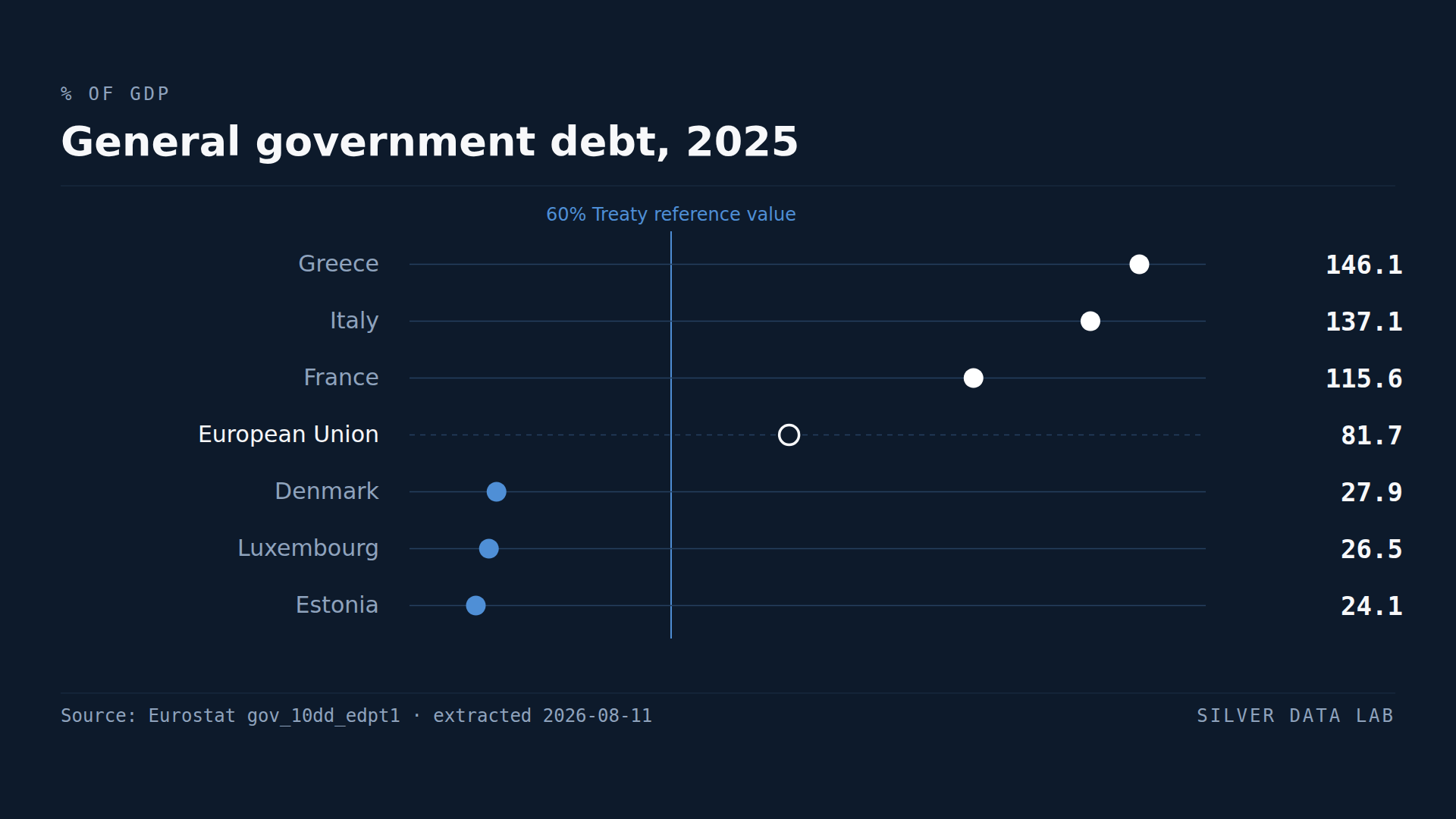
Greece Has the EU's Highest Debt Relative to GDP and a Budget Surplus
EU general government debt stood at 81.5% of GDP in 2025, against a Treaty reference value of 60%.
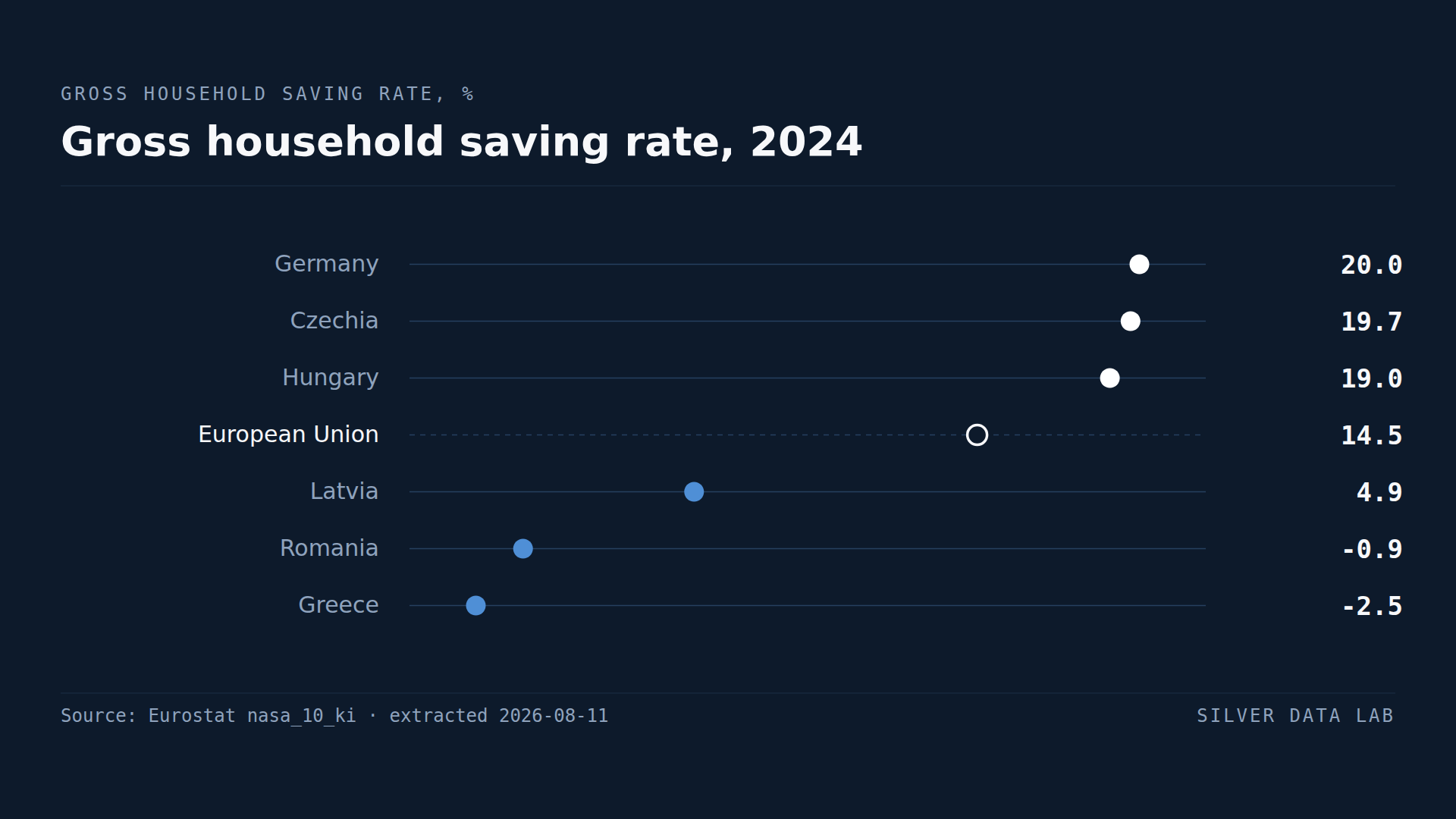
In Two EU Countries, Households Spend More Than They Earn
EU households saved 14.5% of their gross disposable income in 2024.
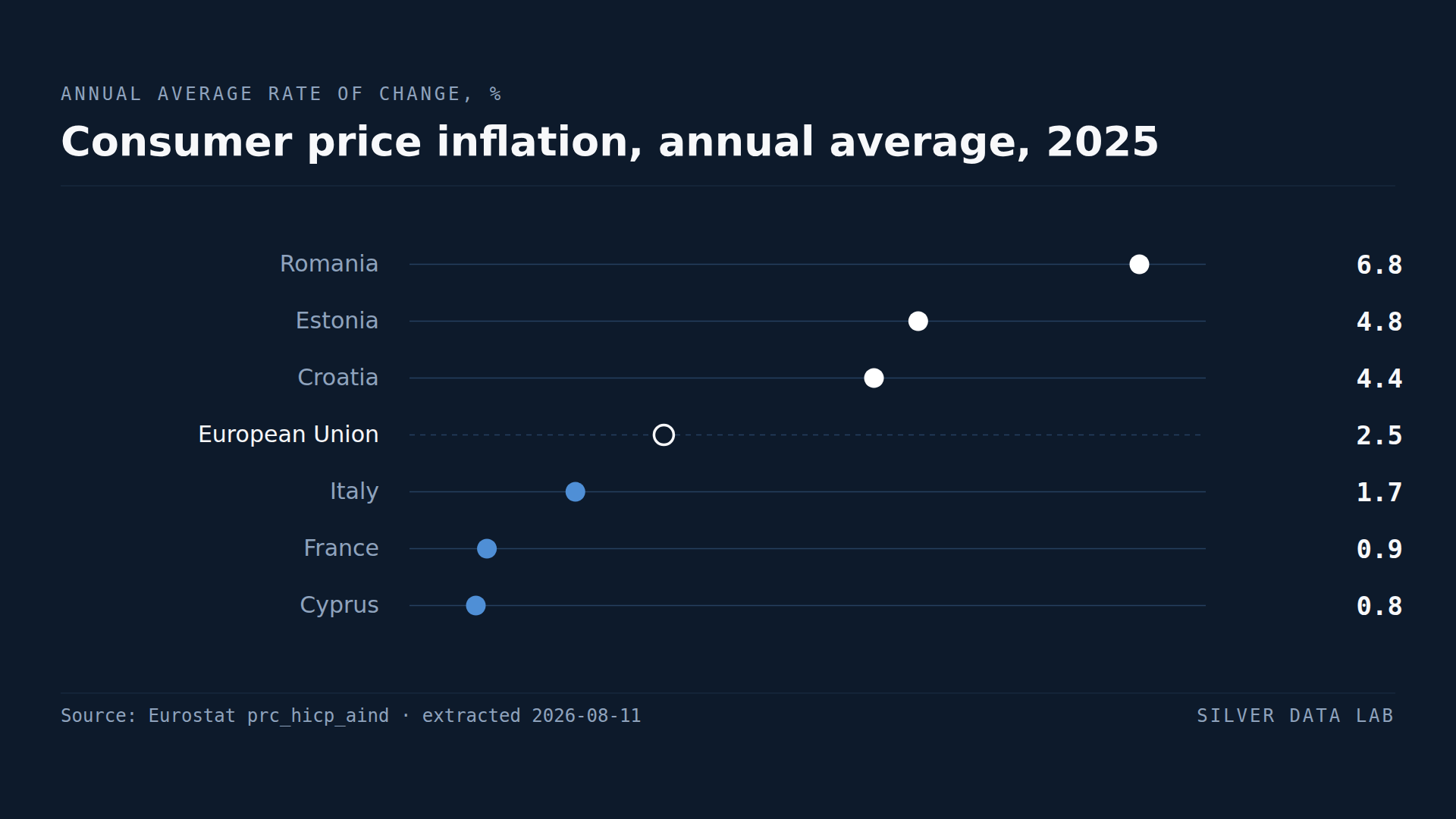
Prices Rose Eight Times Faster in Romania Than in Cyprus
Consumer prices across the EU rose 2.5% on annual average in 2025, and 2.1% in the euro area.
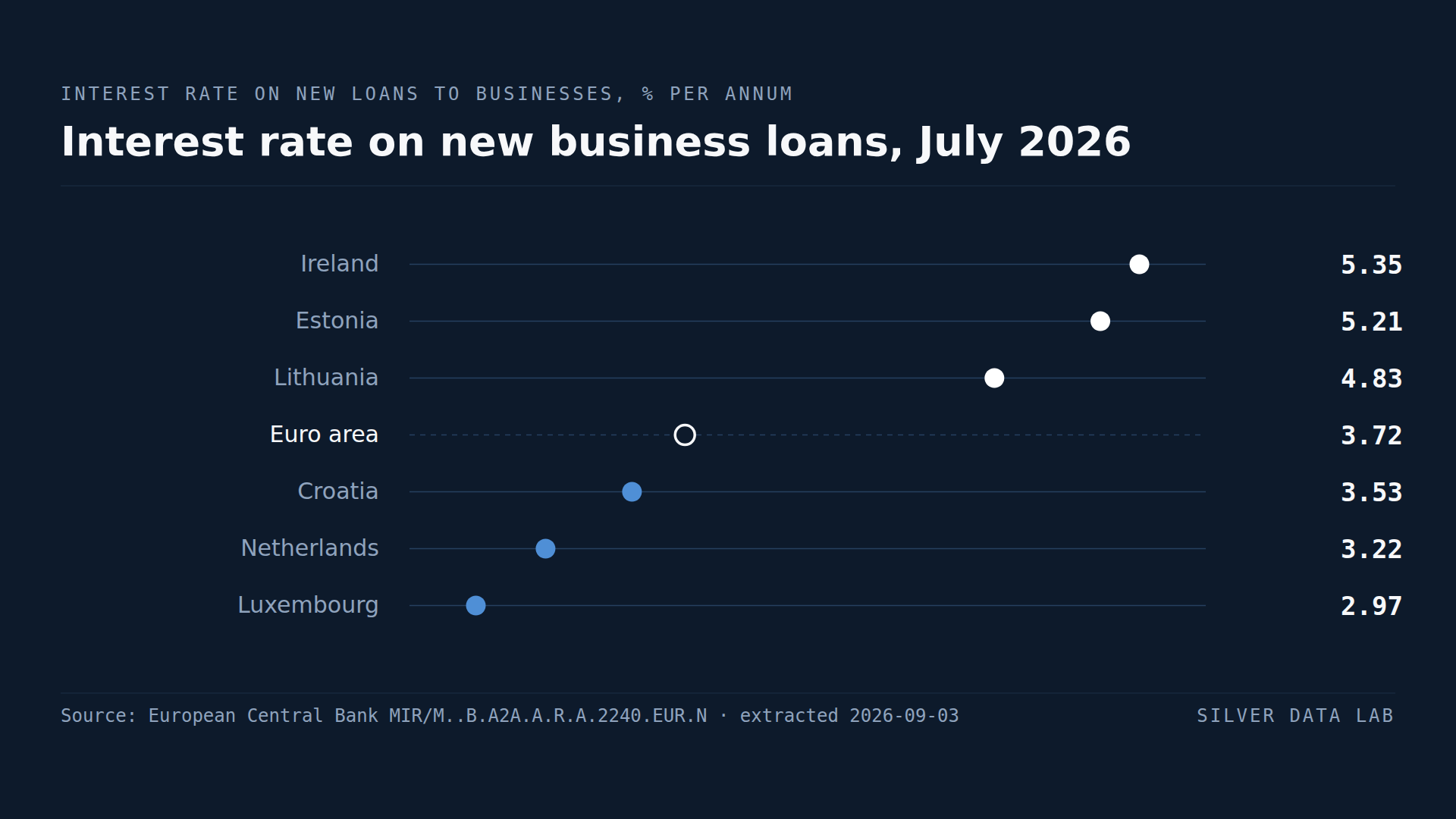
Latvian Businesses Pay the Euro Area's Highest Rates on New Loans
A business borrowing in Latvia pays 5.79% on a new loan; one borrowing in Luxembourg pays 2.95%.
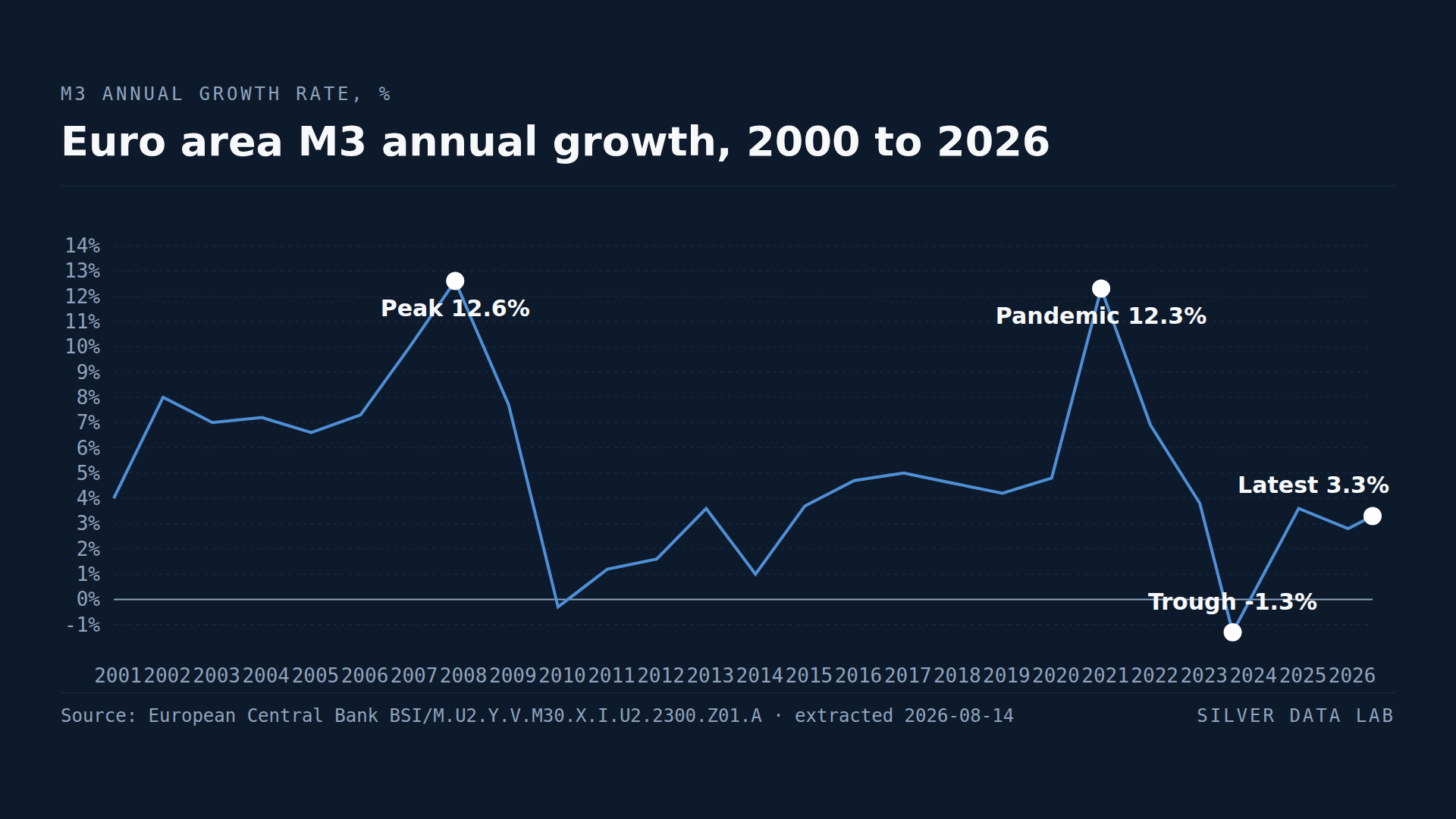
The Amount of Money in the Euro Area Fell by a Record 1.3% in a Year
M3, the broadest measure of euro area money, contracted 1.27% in the year to August 2023 — the deepest fall in a series that starts in 1981.