Population and social conditions
Demography, health and living conditions of the European population.
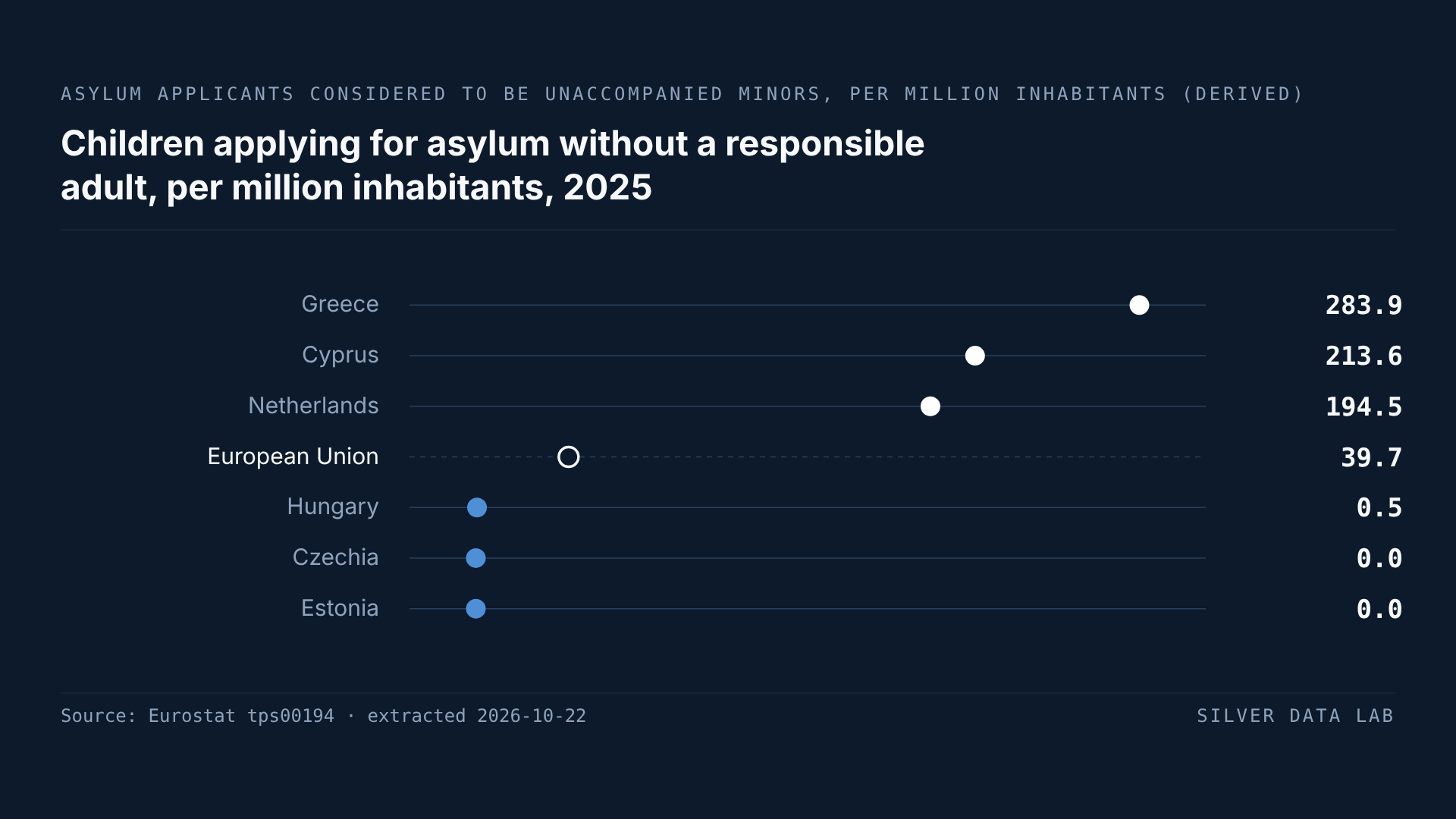
45.9% Fewer Children Sought Asylum Alone in the EU Than a Year Earlier
In 2025, 17,930 children applied for asylum in the EU without a parent or another adult responsible for them, against 33,160 in 2024: a derived fall of 45.9%, to the lowest figure since 2020.
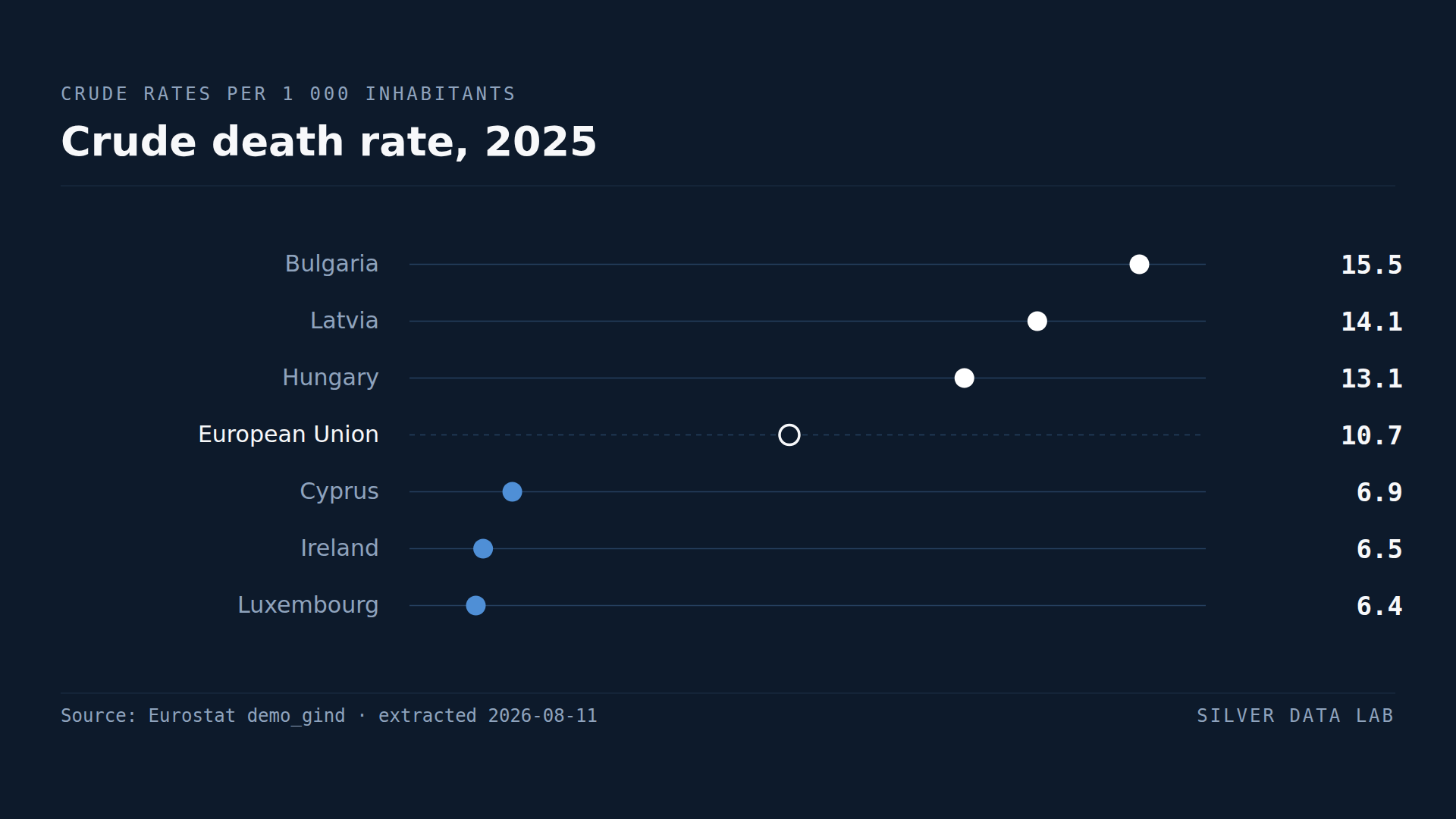
Deaths Outnumber Births in Twenty-One EU Countries
The EU recorded 7.7 births and 10.7 deaths per thousand inhabitants in 2025: a natural change of −3.0.
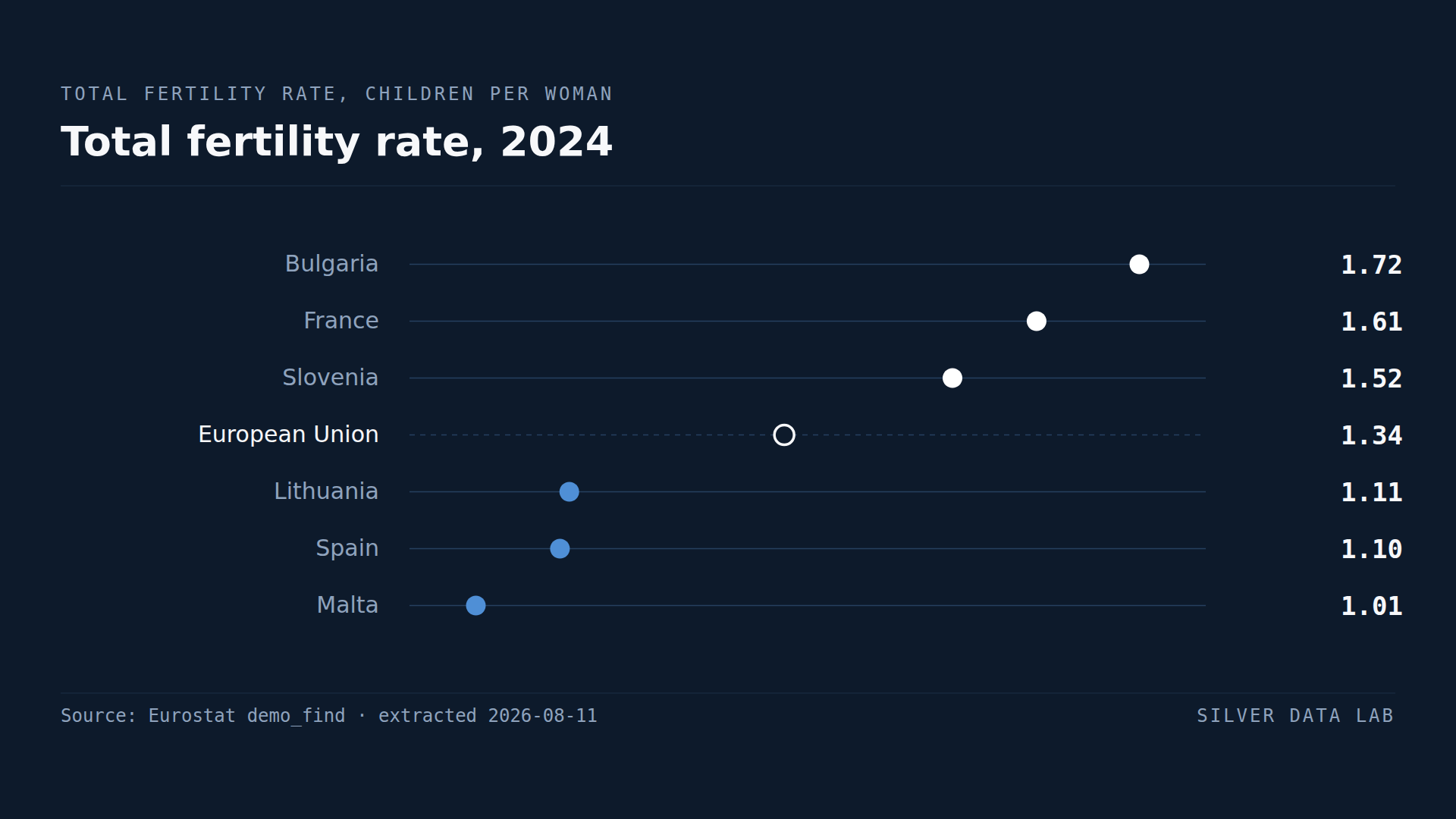
In No EU Country Are Enough Babies Born to Replace Their Parents
The EU total fertility rate was 1.34 children per woman in 2024, against the 2.1 conventionally taken as replacement level.
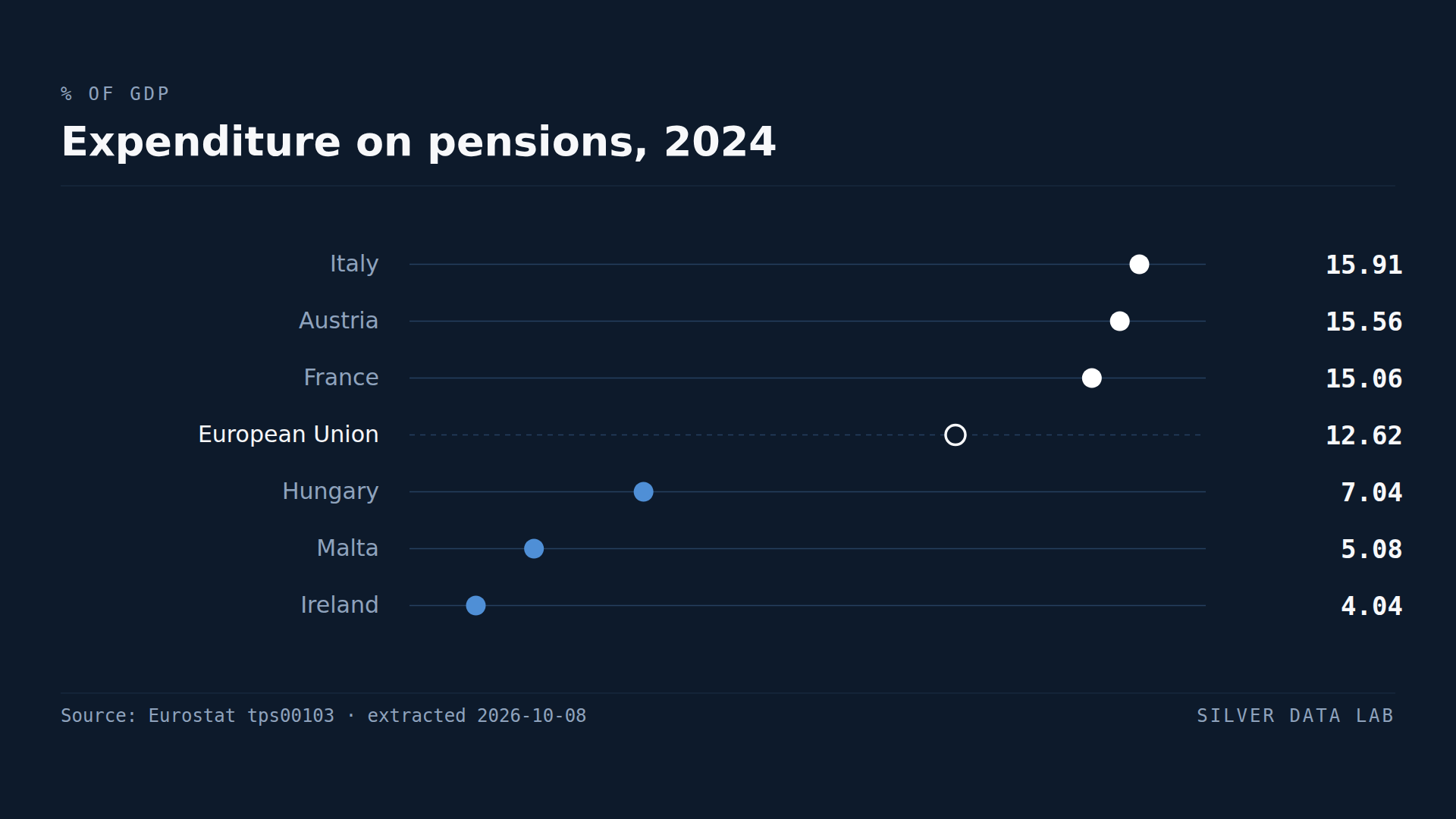
Italy Spends a Larger Share of GDP on Pensions Than Any Other EU Country
The EU spent a provisional 12.57% of its GDP on pensions in 2024, up from an estimated 12.28% in 2023 but still below the estimated 13.15% of 2013.
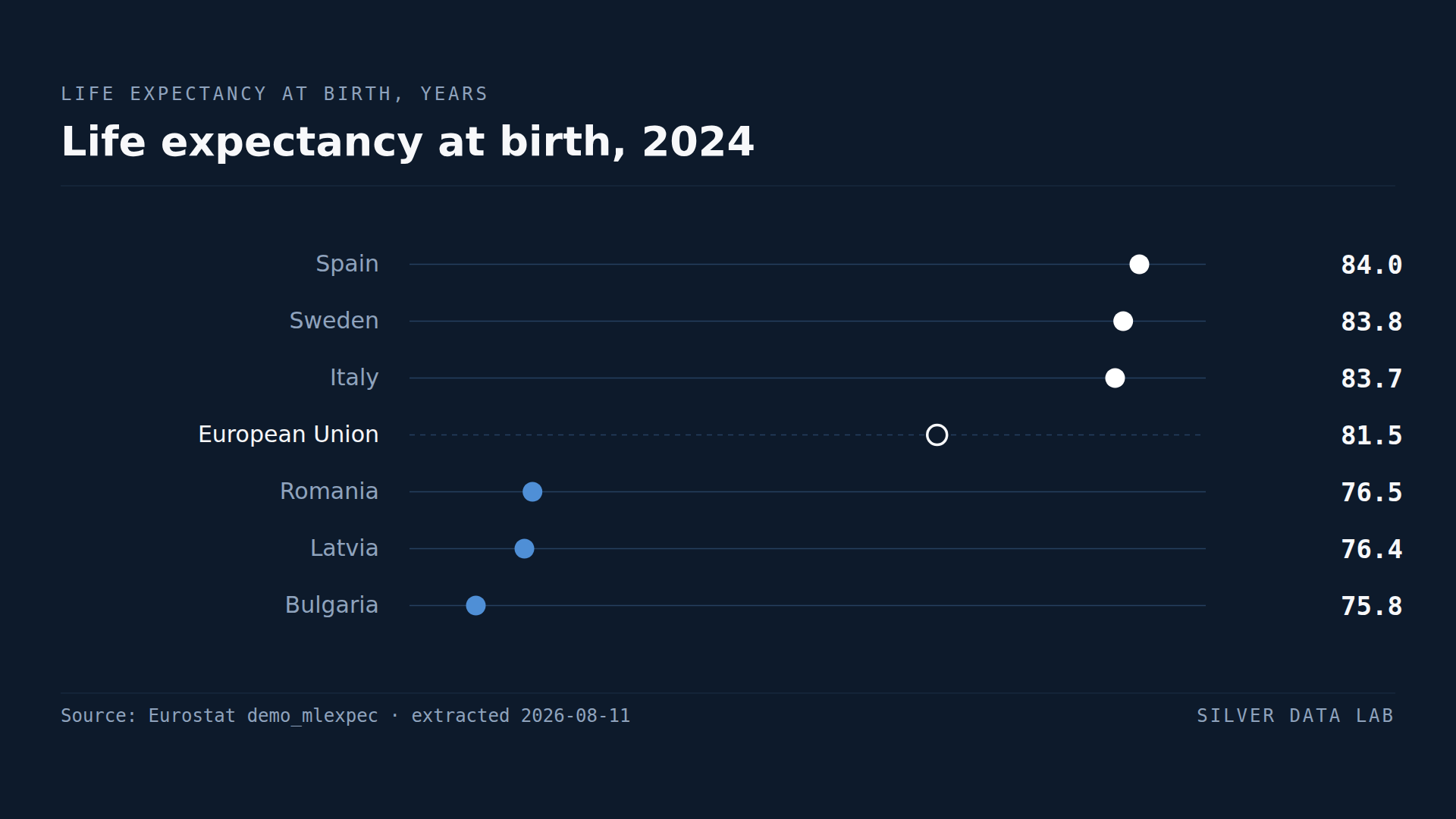
Latvian Women Outlive Latvian Men by 9.8 Years, the Widest Gap in the EU
Life expectancy at birth across the EU was 81.5 years in 2024: 84.1 for women and 78.9 for men.
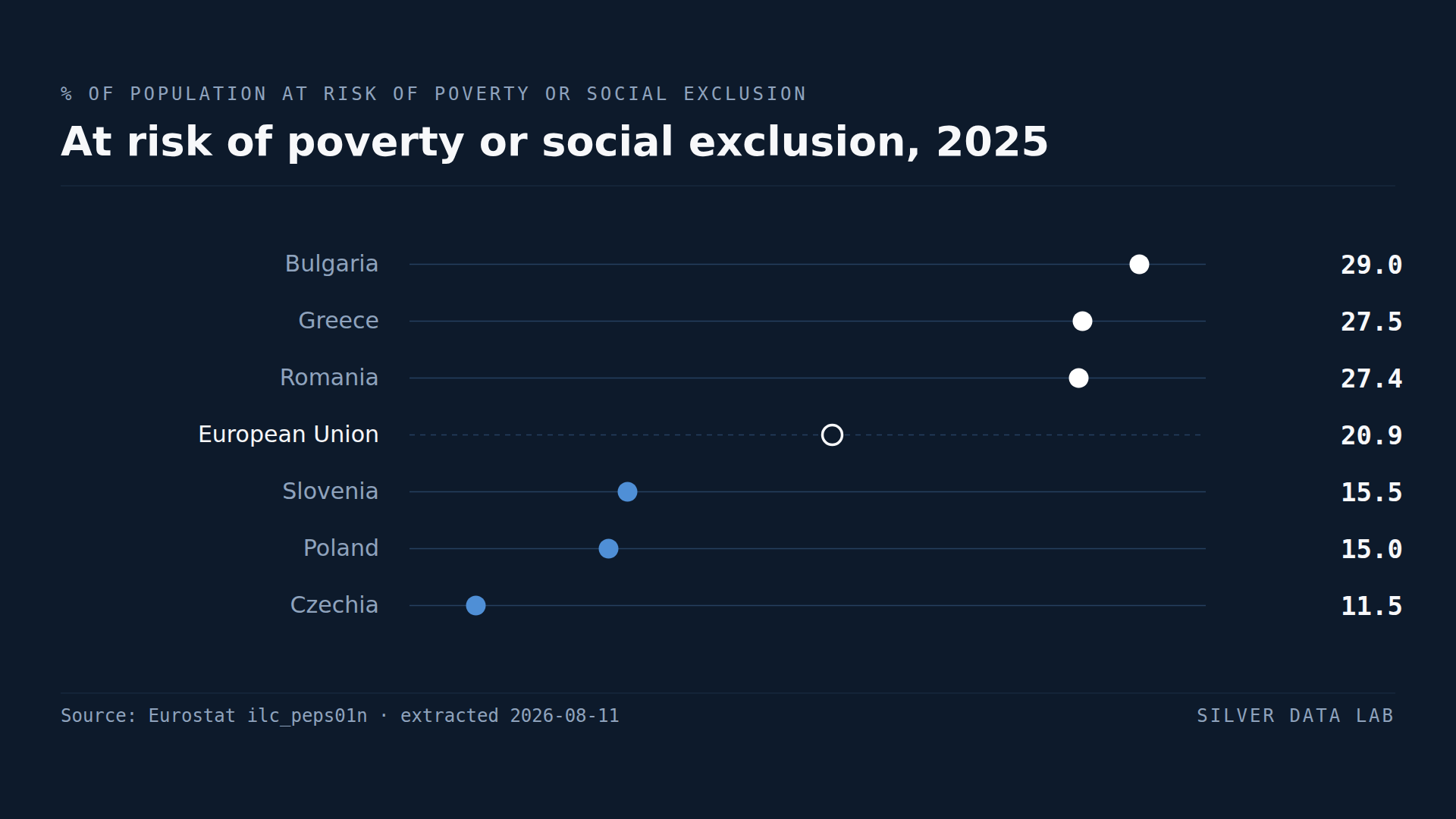
One in Five Europeans Is at Risk of Poverty or Exclusion
20.9% of the EU population was at risk of poverty or social exclusion in 2025 — roughly one person in five.
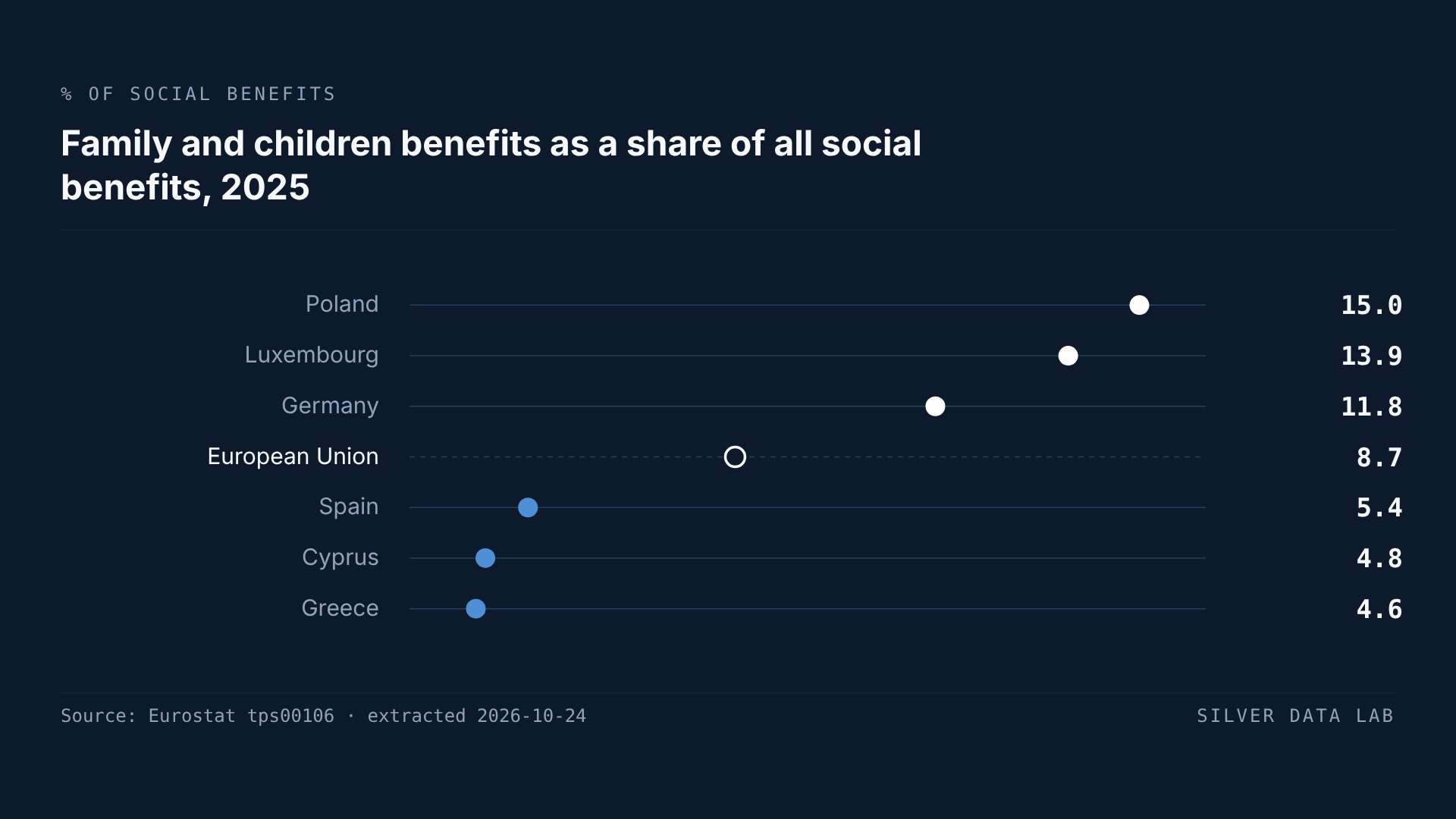
Poland Gives Families More of Its Social Spending Than Any Other EU Country
In 2025 the EU paid 8.7% of its social protection benefits under the family and children function, against 8.0% in 2015. Like every 2025 value in both Eurostat tables, it is an estimate.
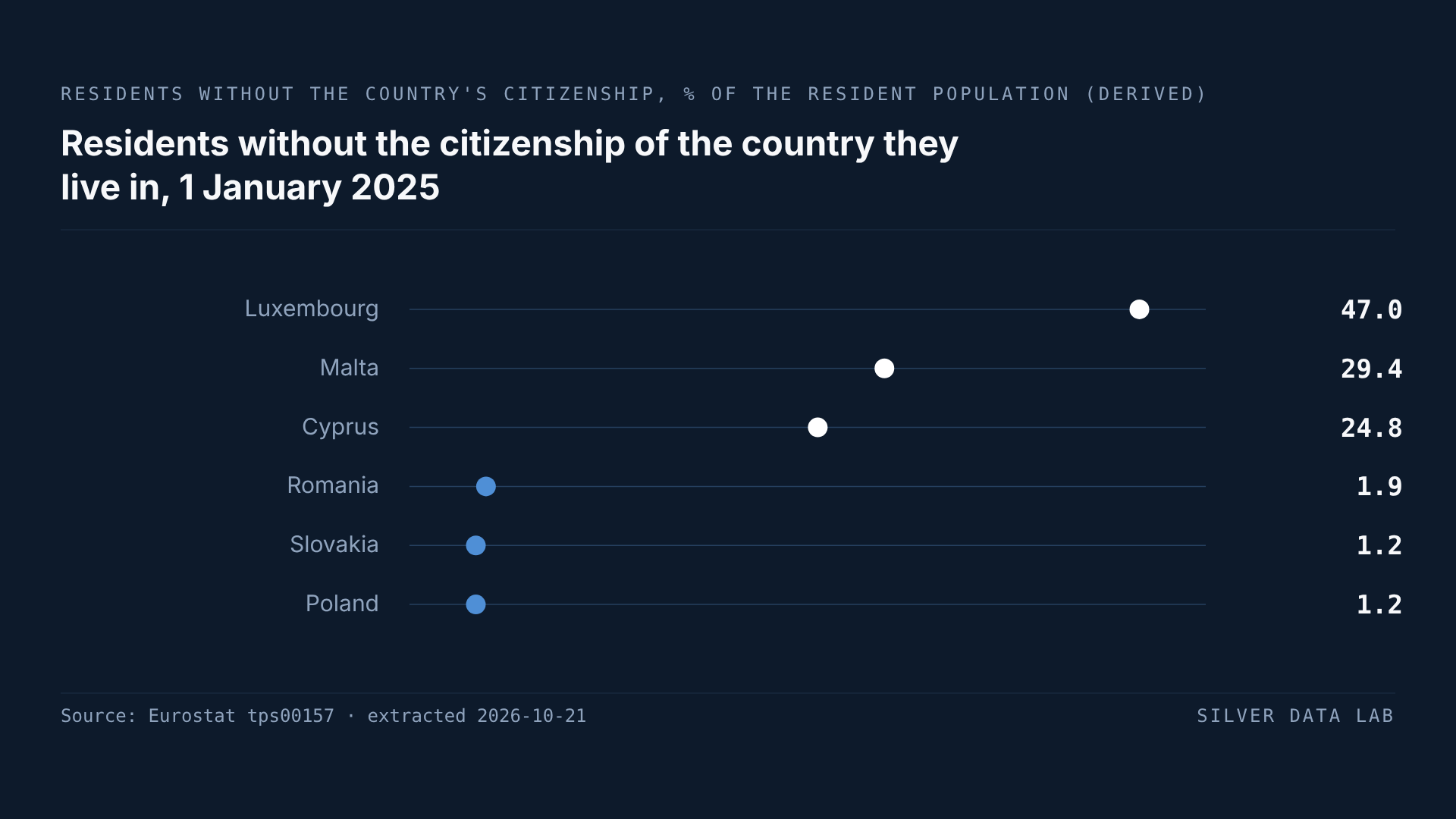
The Share of People in Malta Without Maltese Citizenship Has Quadrupled
On 1 January 2025, 29.4% of the people living in Malta did not hold Maltese citizenship, more than four times the 6.8% of 2014: a derived rise of 22.6 percentage points, three times the next largest in the EU, Austria's 7.5.
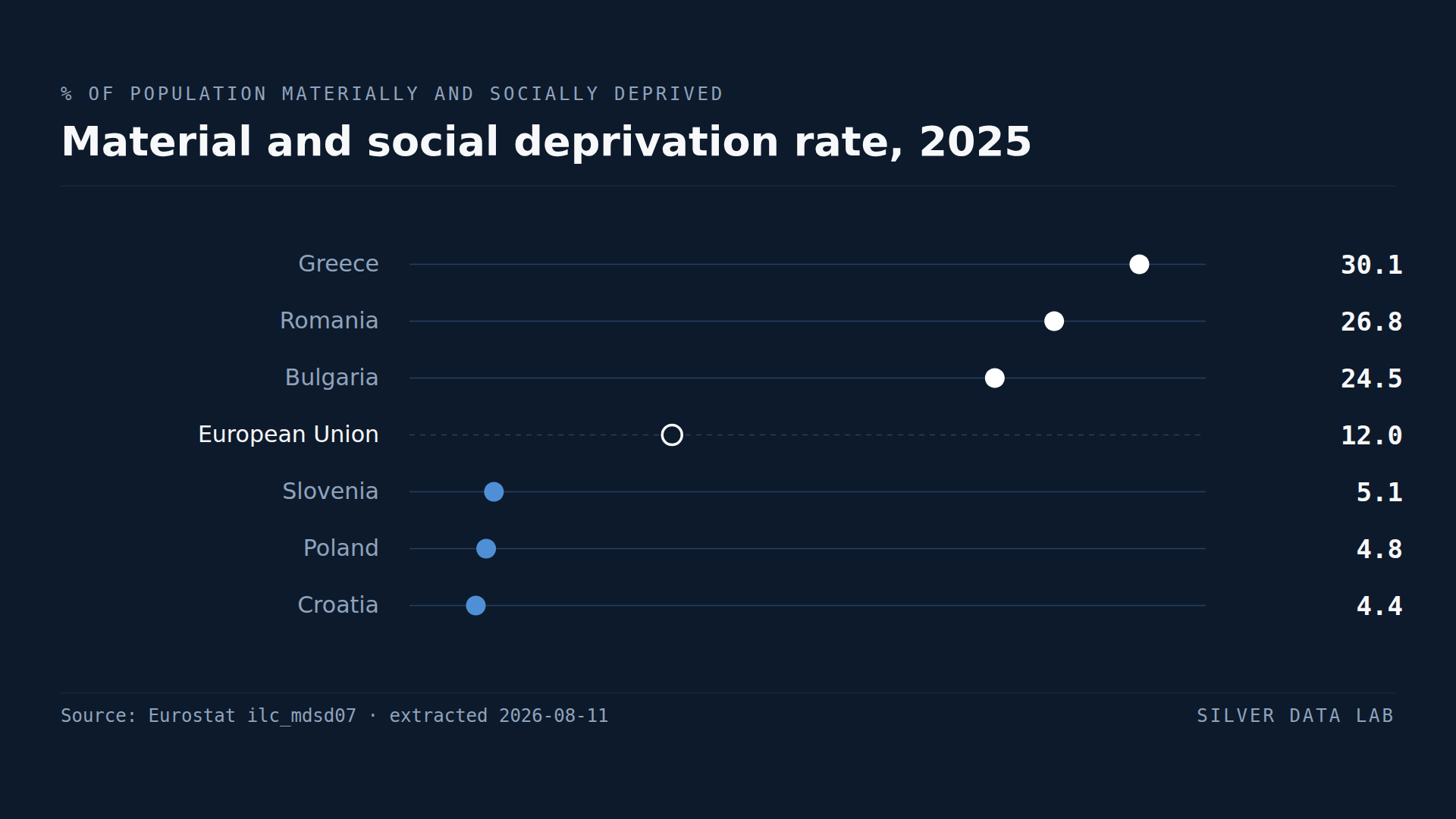
Croatians Are the Least Likely in the EU to Go Without Essentials
12.0% of the EU population was materially and socially deprived in 2025, against 20.9% at risk of poverty or social exclusion.
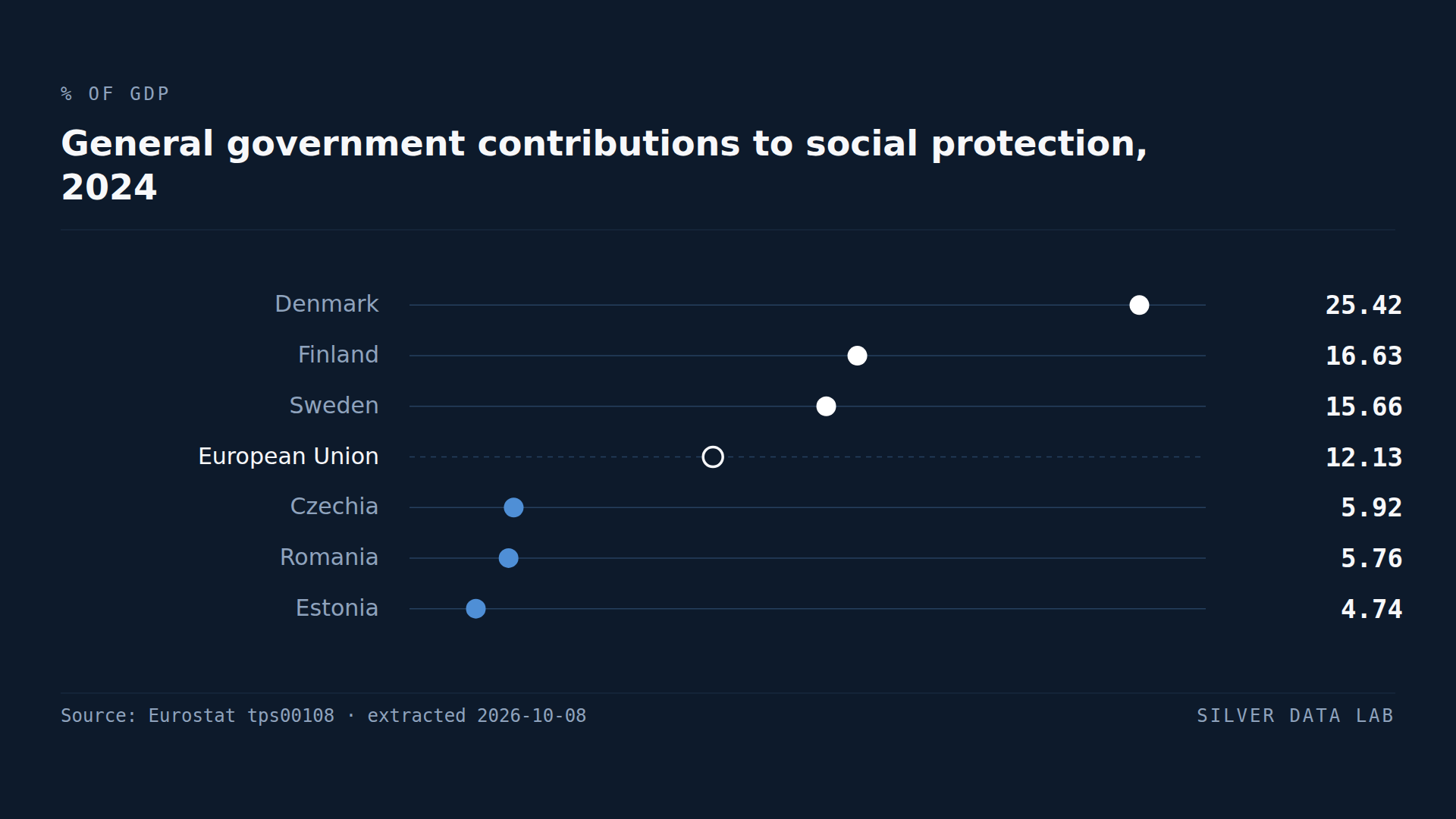
In 19 EU Countries the State Is the Single Biggest Source of Welfare Funds
Across the EU in 2024, social protection schemes received 12.08% of GDP from general government, 10.32% from employers and 6.12% from the people they cover, with a further 0.97% from other receipts; all four EU figures are provisional.